Preparing the system, not just the student

Every year, the National Credit Union Foundation invests in credit unions developing new ways to help people achieve financial well-being. Foundation grants give credit unions room to test bold ideas, grow what works, and share proven models across the movement, so what works in one community can take root in many more.
Through the Foster Youth Grant Program, the Foundation put its commitment to operationalizing financial well-being into practice: helping credit unions make it part of how they design products, train staff, and serve members every day. For young people leaving foster care, often without a financial safety net, that work can change the direction of their financial lives. Donor-funded grants help credit unions on the front lines build programs that others can adapt and carry forward.
USF Credit Union in Tampa, Florida, showed us what that can look like and their work began with one young woman’s story.
The account she never opened
Someone from USF Credit Union happened to meet a young lady named Terri through a community partner and a conversation sparked. Terri spent much of her childhood moving from one foster home to another, experiencing abuse, instability, and the painful uncertainty of never knowing where she truly belonged. Like so many young people aging out of foster care, she entered adulthood without the safety net, guidance, or financial role models many of us take for granted.
But Terri was determined to build a different future for herself. One day, she gathered the courage to walk into a large, well-known bank to open her first checking account. It was supposed to be a milestone. A step toward independence. A moment of empowerment. Instead, when she approached a bank employee for assistance, she was directed to a kiosk to complete the process online.
The screen presented questions she didn’t understand, financial terminology she had never learned, and decisions she didn’t feel equipped to make. She didn’t know the difference between account types. She didn’t know what information she needed. And perhaps most painfully, she didn’t know how to ask for help. So, she left.
No account. No confidence. No sense of accomplishment. And even less hope for her financial future.
The USF Credit Union employee didn’t stop with the conversation and Terri’s story ended up changing the way the Tampa-based credit union approached its Foster Youth Grant. It also raised a question every financial institution should sit with: if the product is available, the technology works, and the doors are open, but a young person still walks out, did they ever really have access?
Two sides of the same relationship
USF Credit Union is a $1.3 billion low income designated credit union serving the University of South Florida community, healthcare professionals, and educators. With a 2025–2026 Foster Youth Grant from the National Credit Union Foundation, it set out to build financial wellness support for young people in and aging out of foster care. The first phase followed a familiar path of financial education, savings incentives, and community partnerships.
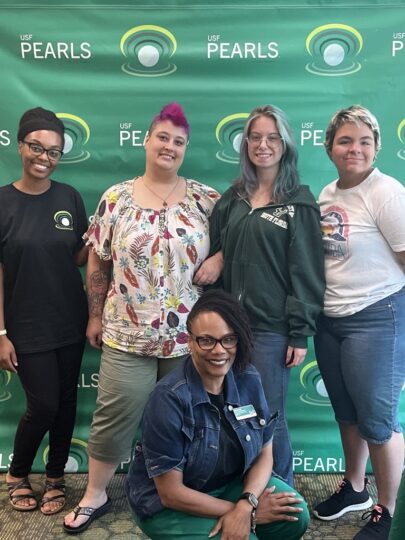
Then the team paused to listen to their community. Through partners including Pasco Kids First, USF’s PEARLS program, and Madi’s Movement, they kept hearing the same thing. For young people who have experienced foster care, instability, or trauma, money isn’t just math. It’s tied up with trust, authority, and past experiences with institutions.
Some of the most powerful lessons came in person. At an immersive luncheon hosted by Madi’s Movement, the team learned that many young people leave foster care at 18 with little more than a yellow envelope holding the only documentation of who they are, and sometimes even that is incomplete. At one point, the team was talking about what a girl placed in foster care at age 3 and moved 55 times must have felt. The uncertainty, the lack of stability, the questions about identity and belonging. Then they realized she was sitting right there with them. Today, she’s a successful artist and entrepreneur who uses her story to support others facing similar challenges.
“Being awarded the grant from the National Credit Union Foundation has ignited something deeper in us,” said Juli Lewis, Vice President of Strategic Partnerships at USF Credit Union. “We have an opportunity, and a responsibility, to show up differently.”
For USF Credit Union, showing up differently meant rethinking who needs to change. “Decreasing disparities cannot rest solely on asking foster youth to become better prepared to navigate the financial system,” Lewis said. “Financial institutions have a responsibility to become better prepared to serve them.”
The credit union made a deliberate pivot and instead of spending the rest of its grant on one-time incentives, it invested in both the young people and the institution that serves them.
Equipping the people who show up every day
The work started with the professionals already in young people’s lives. Through existing partnerships, USF Credit Union is providing financial education and training to caseworkers who together serve more than 5,000 cases a year. Every one of those caseworkers now carries financial knowledge into conversations with the youth and families they support.
Then the credit union looked inward. Terri shared her experiences as USF Credit Union worked with the Inspire World Foundation and FiSafe to develop the Compassionate Banking™ Certification. Terri’s firsthand perspective helped shape how the program teaches financial professionals to recognize the ways trauma, chronic stress, and past experiences can affect someone’s relationship with money and institutions. This could include anyone needing a little extra guidance when it comes to money. And when they recognize those dynamics, how to move interactions from transactional exchanges toward trust-centered conversations.
Finally, USF Credit Union invested in the program’s inaugural Train-the-Trainer cohort. Ten employees are currently completing 27.5 hours of training each, 275 hours in all, learning to:
- Recognize how trauma, chronic stress, and financial adversity influence financial behavior and decisions
- Build trust and communicate in trauma-informed ways
- De-escalate difficult interactions
- Turn transactional exchanges into trust-centered conversations
Because it’s a train-the-trainer model, those 10 employees, scheduled to graduate in the Spring of 2027, become certified facilitators. They’ll bring these practices to colleagues across the credit union, so every member who sits across from them benefits too. As the program puts it, “every financial interaction is ultimately a human interaction.”
From one-time events to ongoing support
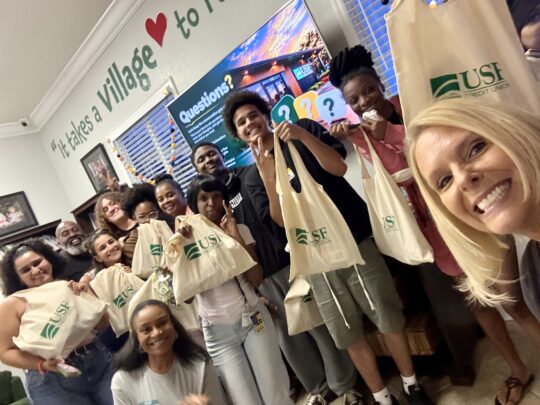
USF Credit Union is investing directly in these young adults through a new Financial Rebellion × PEARLS initiative on USF’s Tampa and St. Petersburg campuses. Instead of a single workshop, more than 36 foster-connected students get ongoing access to a 12-module curriculum, tools and calculators, weekly content, podcasts, live programming, and participation incentives.
The topics match the decisions young adults actually face on their own: budgeting, credit, housing, transportation, emergency savings, avoiding financial traps, entrepreneurship, and building wealth. Students can share the content with friends and peers, too.
The platform also lets the credit union see how students engage over time. Success is measured by continued use and progress, not attendance at one event. In partnership with PEARLS, USF Credit Union will also track longer-term outcomes like persistence and graduation, aiming to help more students beat the 3% benchmark for foster youth earning a college degree.
Impact that multiplies
With the Foster Youth Grant, USF Credit Union built a network of support around foster-connected youth. Forty-five caseworkers, who together serve more than 5,000 cases a year, ten employees, becoming certified Compassionate Banking™ trainers, with 275 training hours between them and more than 36 students who have ongoing access to financial wellness resources and savings matches, and USF Credit Union continues to provide direct support through their community partners.
The ripple effect is already reaching beyond Tampa Bay. After USF Credit Union shared its Compassionate Banking approach at the Global Women’s Leadership Workshop, other credit unions asked about bringing the training to their own teams. And the credit union is talking with the University of South Florida about a potential research project to measure how well trauma-informed approaches work in financial services, with findings to share across the movement.
Changing the experience for the next Terri
Today, Terri has a credit union account. More importantly, she has people she trusts to turn to for financial guidance, and more confidence navigating her financial life.
Her story reframed the question at the heart of this work. It’s no longer only “How do we teach foster youth about financial services?” It’s also “How do we teach financial institutions to better serve foster youth and others who carry money trauma?”
“Terri helped us realize that the greatest impact of this grant may not be a single incentive, workshop, or account opened,” Lewis said. “It is the opportunity to change the experience for the next Terri who walks through the doors of a financial institution feeling overwhelmed and unsure whom to trust.”
People helping people. Not just when it’s easy. Not just when someone knows the right questions to ask. But especially when they don’t.
That’s the kind of innovation credit unions are built for. USF Credit Union didn’t just serve the young people in front of it. It changed how the institution itself shows up, then started sharing what it learned. Caseworkers are carrying financial knowledge into thousands of cases. Ten future trainers will bring Compassionate Banking across the credit union. And other credit unions are already asking how to do the same.
That’s the multiplier effect the Foundation’s grants are built for. When one credit union finds a better way to serve people, others can learn from it and make it their own, carrying financial well-being further than any single program could.
The National Credit Union Foundation is proud to support USF Credit Union as it helps the movement rethink what access really means, and grateful to the donors who make this work possible.
USF Credit Union was a recipient of the 2025–2026 Foster Youth Grant. Learn more about the Foundation’s grant programs.